
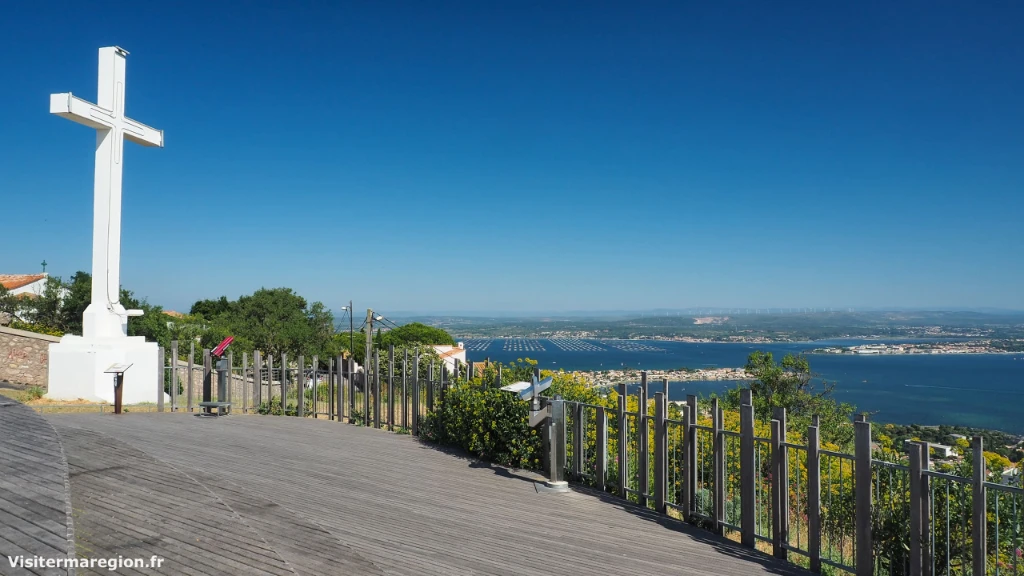
Mont Saint-Clair rises above Sète and offers the best viewpoint for understanding the city. From the top, the Mediterranean, harbor, Lido and Thau Lagoon all appear in a single panorama. You can walk up for the pleasure of the climb, take the bus or drive to the upper slopes.
Why go up Mont Saint-Clair?
Sète developed between the sea and lagoon around a hill that can be seen from far away. From the overlook, the geography becomes much clearer: the center and its canals at the foot of the hill, the harbor facing the Mediterranean, the sandy ribbon of the Lido stretching toward Marseillan and the shellfish farms in the Thau Lagoon.
The panorama changes with the light. In the morning, the lagoon and inland landscape are often sharper. Late in the day, the city and sea take on warmer colors.
Walking up Mont Saint-Clair
From the city center, the climb follows streets, stairways and residential paths. The distance is reasonable, but the slope is steep and the sun can make it challenging. Allow roughly 45 minutes to one hour to reach the top, depending on your starting point and pace, not including breaks.
Start early in summer, bring water and wear supportive shoes. The route is not suitable for every stroller or for visitors with limited mobility. In that case, the bus is a much more comfortable option.
Reaching the viewpoint by bus
Line 5 of the Sète Agglopôle Mobilité network serves the area. The La Croix Saint-Clair stop is a short walk from the main viewpoints. Schedules change during the school year, summer and some public holidays, so check the current timetable before leaving.
A pleasant option is to ride the bus uphill and walk back down. Everyone can enjoy the panorama without having to complete the full ascent. See the official Sète Agglopôle Mobilité schedules.
Driving to Mont Saint-Clair
You can reach the upper slopes by car, but parking is limited near the most popular sites. Arrive early during peak season and be careful not to block residential access. Driving is most useful if you plan to continue to the Pierres Blanches forest, La Corniche or the beaches.
Visit Notre-Dame-de-la-Salette chapel
Near the summit, Notre-Dame-de-la-Salette chapel is an interesting heritage stop. Built in the 19th century on a former fortified site, it is known for its peaceful atmosphere and painted interior. Respect the silence and any services taking place during your visit.
The nearby overlook faces the Thau Lagoon and the city. Take time to move between viewpoints: the panorama toward the sea is very different from the one facing the lagoon.
Continue to the Pierres Blanches forest
The state-owned Pierres Blanches forest covers part of the slope. Its trails provide other views over the Lido and add a walk in the relative shade of the pines. The ground can be uneven, and the vegetation does not provide shade everywhere.
For a full day, continue downhill toward the Musée Paul Valéry and the Cimetière Marin. Our guide to the museums of Sète will help you choose the right visit.
What is the best time to go?
- Spring and fall: temperatures are comfortable for walking.
- Summer: choose early morning or late afternoon.
- Strong winds: bring an extra layer and be careful near exposed viewpoints.
- After rain: some sections may be slippery.
Plan your outing from central Sète
From our apartment in central Sète, you can walk to the start of the climb or easily reach a Line 5 bus stop. On your return, round out the day with a walk along the canals and through the Quartier Haut.