
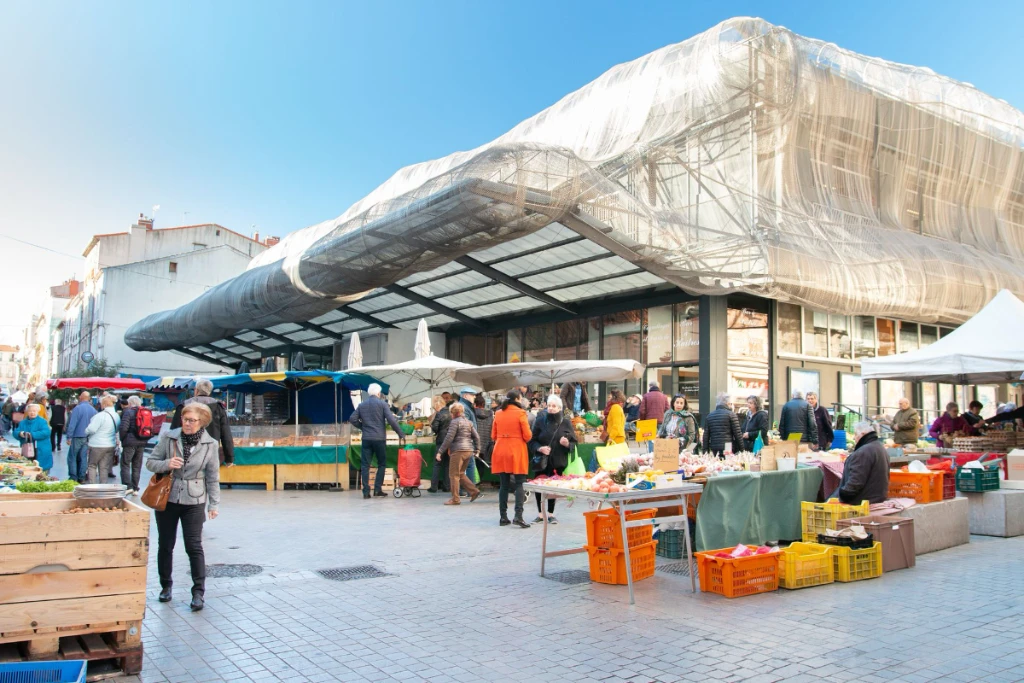
Les Halles de Sète is at once a covered market, a meeting place and one of the best introductions to local cuisine. People come to buy fish, shellfish and fresh produce, but also to have coffee, eat lunch at a counter or simply watch the city center come to life.
When should you visit Les Halles de Sète?
Morning is the best time. The stalls are well stocked, locals are shopping and the atmosphere gradually builds as lunchtime approaches. Arrive fairly early if you want to explore the entire market or have a better chance of finding a seat at a counter.
Hours may change on public holidays, and some vendors close before the building does. Check local information if your visit falls on a special date. Because the market is covered, it is also an excellent rainy-day activity or a welcome escape during the hottest part of the day.
Try a tielle sétoise
Tielle is the specialty most closely associated with Sète. This orange-hued savory pie is filled with a seasoned mixture of octopus and tomato. It can be eaten warm or cold, in an individual portion or shared. Recipes vary slightly from one producer to another: the crust may be thicker or thinner, and the sauce milder or spicier.
To compare without filling up too quickly, share a small tielle and then continue with other products. Ask the vendor how to reheat it if you are taking it back to your accommodation.
Discover local fish and shellfish
The stalls reflect the relationship between Sète, the Mediterranean and Thau Lagoon. Seasonal fish, octopus, cuttlefish, mussels and oysters vary with the daily catch and deliveries. Instead of looking for one particular species, ask what is best that day and how to prepare it.
Oysters and mussels from the lagoon need little preparation. When buying fresh products, ask for transportation and storage advice, especially in summer. A cooler or insulated bag is essential if you are not returning immediately.
Other Sète specialties to know
- Macaronade: a family-style dish of pasta, meat and tomato sauce, with many variations.
- Stuffed mussels: prepared with a savory filling and generous sauce.
- Bourride: a fish dish served with an aioli-based sauce.
- Stuffed squid or calamari: another expression of the city’s maritime cuisine.
- Local cookies and sweets: easy souvenirs when fresh products are not practical.
Not all of these dishes are necessarily available at Les Halles every day. Think of the list as useful vocabulary for reading restaurant menus and talking with vendors.
Have lunch in or around the market
Several counters serve food in or near the market. The atmosphere becomes especially lively at lunchtime. If you want to sit down, arrive before the busiest period and remain flexible about where you eat.
Another option is to assemble a picnic with tielle, bread, fruit, cheese and other easy-to-carry foods. Then walk to the quays or the Môle Saint-Louis, while keeping perishable products properly chilled.
A food-focused walk through the center
After Les Halles, head down to the Canal Royal and follow the quays. This loop combines food and city sightseeing without transportation. Our walk along the canals of Sète and through the Quartier Haut starts just a few minutes away.
You can also buy ingredients to cook at your accommodation, then head out again in the evening when the light softens over the harbor.
Practical shopping tips
- Bring a reusable bag and an insulated bag for fresh products.
- Walk around all the stalls before choosing.
- Ask about origin, seasonality and preparation.
- Try small portions so you can sample several specialties.
- Locate Les Halles de Sète before setting out.
Stay just a few minutes from Les Halles
Entre Canal & Criée is in central Sète, a short walk from the market. Its equipped kitchen makes it easy to prepare what you buy in the morning, while restaurants and the quays remain accessible without a car.