
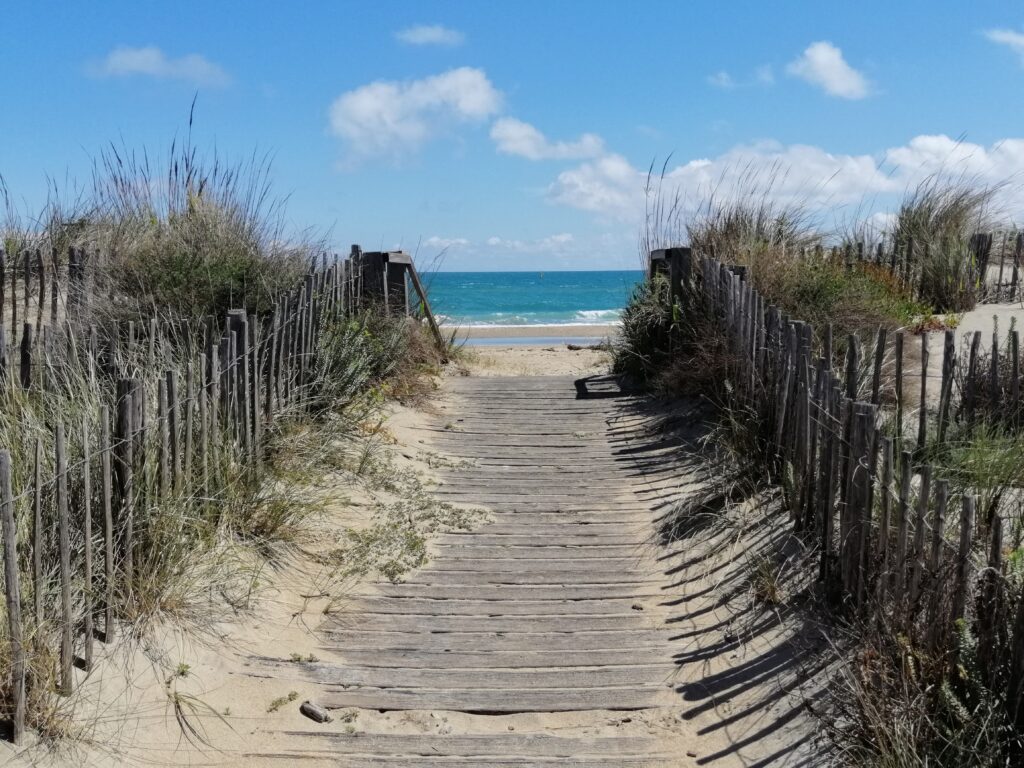
Sète has nearly 7.5 miles (12 km) of sandy coastline between La Corniche and Marseillan. The first beaches are close to the city and its services; farther out, the Lido offers more space and a dune landscape between the Mediterranean and Thau Lagoon. The best choice depends on how you are getting there, whether you are traveling with children and the atmosphere you want.
La Corniche: the closest beach to the city
La Corniche beach consists of two protected coves near the Canal des Quilles, restaurants and several facilities. It works well for a few hours by the sea without traveling far along the Lido. The setting is more urban, and space can be limited during peak season.
A separate zone is reserved for certain water sports. Follow the signs and do not settle in channels intended for boats or boards.
Lido beach: services and a wide expanse of sand
Lido beach is around access points 20 to 24. Access 22 has a lifeguard station during the season, and the area includes facilities, a playground and places to eat. A bike path runs along the promenade, making it convenient to reach the beach by bicycle.
This is a balanced choice for families and visitors who want an equipped beach without giving up the feeling of open space. Lifeguards and services are seasonal, so check the information posted when you arrive.
Baleine, Trois Digues and Castellas: finding more peace and quiet
As you continue toward Marseillan, the access points become progressively farther from the city center. Baleine, Trois Digues and Castellas beaches offer long views and more distance from town. Some access points have a summer lifeguard station, but services are not the same everywhere.
Choose your destination before setting out, especially if you are taking the bus. In more natural areas, protect the dunes, use marked paths and take all trash with you.
How can you reach Sète’s beaches without a car?
Lines 3 and 9 of the Sète Agglopôle Mobilité network serve the coast depending on the season. In summer, Line 9 continues toward Marseillan. Routes and frequencies change, so check the app or official schedule on the day of your trip.
The Lido is particularly well suited to cycling because of the dedicated path and nearly flat terrain. From the center, remember to account for the round trip, bring water and use a good lock. Strong walkers can reach the first beaches on foot, but summer heat makes the journey demanding.
Where should you swim with children?
Choose a beach with seasonal lifeguards and stay near the lifeguard station. La Corniche and the Lido offer useful services, but no lifeguard can replace active adult supervision. Check the swimming flag and posted information about currents, jellyfish and water quality when you arrive.
Bring a beach umbrella or suitable shade shelter, as natural shade is scarce. Surfaces can become extremely hot, and the wind can create a misleading feeling of coolness.
Enjoying the Lido beyond swimming
The Lido promenade is excellent for walking, cycling and running. Outside summer, it is a beautiful place to enjoy the landscape even when the water is too cold. Near sunset, the beach and Mont Saint-Clair are bathed in especially attractive light.
Water-sports enthusiasts can also book a guided outing. Read our guide to kayaking and paddleboarding in Sète.
What to bring for a successful beach day
- Water, sunscreen, a hat and sunglasses.
- Shoes or sandals for access paths and hot surfaces.
- A light jacket for the evening when the breeze picks up.
- A bag for taking your trash away.
- Check the flags and follow instructions from the lifeguard station.
Find the latest list of access points and services on the official page about Sète’s beaches.
Getting to the sea from your accommodation
From Entre Canal & Criée, central bus stops provide easy access to the coast. Spend the day at the beach, then return to Les Halles, the quays and nearby restaurants on foot in the evening.